rea stama toulakis

pricing confidence for creative studios, agencies & type foundries | founder omalos advisory

background

For 6 years I’ve been dedicated to the creative industry.

Before I worked as a business transformation consultant at Mazars Germany, at Deutsche Lufthansa, and at the German National Bank.

I was always interested in the connection between money and emotions, as well as the history of money ~ so I studied economics for 10 years with a focus on how to use prices as a protective mechanism for businesses.

Naturally my approach always integrates commercial clarity, emotional intelligence, and cultural insight.

I believe generic business advice doesn’t work if you built for long-term impact. That is why my approach stays dynamic to the situation at hand.

My clients have won six-figure pitches, 4-5×’d their project fees in under four months, or doubled their revenue in less than 1. All because they were open to restructure their studios to focus on high-value projects only.

But rarely only quantitative metrics are the focus of my work. I always include the quantitative goals as well.

In my opinion, most miss the 2-fold nature of pricing:

  • the external
    (market positioning, competitive analysis, rate benchmarks)
  • the internal
    (confidence, self-worth, identity)

Why this matters more now than ever:

The times of predictable growth are over + economic volatility is here to stay.

Those that thrive ~instead of survive~ won’t be the ones chasing every opportunity, doing the best execution or competing on price + deliverables.

They’ll be the ones with pricing systems that protect their capacity, creativity, and integrity.

Because when your pricing protection isn’t in place, you become a price taker, not a price maker.


advisory

Most founders don’t have a knowledge or revenue problem. The issue sits at the deeper layer, namely that their commercial + financial architecture rarely catches up to the current business environment. And that they miss someone to challenge their thoughts with.

I’ve spent 6 years analyzing the financials of 35+ creative studios across 7 countries. I’ve seen it all bank statements, quotes, forecasts, and more.

Now, I guide founders towards restructuring how they price, operate, and (de)grow so they can build a world around their studio that is nourishing.

I spot what founders miss in their data when they’re too close to the work. You stay fully in charge, and I hold you accountable ~ which means sometimes you will hate me ;).

My advisory takes place across 3 main formats:

1) team advisory

If you’re a 2–15 people studios where you as a founder are still involved in negotiating client projects, ensuring quality, and maintaining client relations.

We work on building the financial and commercial infrastructure that doesn’t depend on you being everywhere all at once.

We replace this dependency with structure, so your studio has

  • more money to reinvest per project or service
  • an extended runway giving you financial breathing room
  • a strengthened value proposition that makes premium pricing feel obvious to clients
  • a positioning and system that allow you to charge premium rates with the right narrative

I review all of your outgoing client quotes and show you how you can navigate multiple stakeholders, e.g. the marketing, finance, and procurement department, on your client’s side.

As a founder you stop being the bottleneck your studio relies on but become its cognitive compass.

Enter here.

2) solo advisory

This is for solo-founders operating alone at 250k/annual revenue and aiming to surpass that.

At the moment everything depends on you ~ you are head of client delivery, visibility, finance, and business development.

Most of your cashflow is unpredictable month to month, which also makes you say yes to work you dislike. In a sense, every conversation becomes a negotiation against yourself or your bank account.

We establish a positioning within your ecosystem that allows you to charge premium rates confidently ~ so you walk into every conversation knowing exactly what you’re worth and how it connects to your financial goals.

And every quote, proposal, or pitch you send out? We tear it apart and I show you exactly where you’re setting yourself up to fail before the budget conversation even starts, e.g. by discounting against yourself.

You stop being the person who hopes the client agrees to the price you name but become the person whose price was never questioned.

Enter here.

3) advisory power hour

Not everyone needs a long-term advisor.

Sometimes you just need a second pair of eyes to answer: Does this even make sense?

Use this when you have hit a block when it comes to your pricing, numbers, or one immediate question.


This is for anyone that runs a business + needs a second opinion on a quote, financial calculation, or decision without committing to a full engagement.

Enter here.

I work with those who value impact over vanity metrics.

We’re not a match if

  • you expect me to implement or execute
  • you have no existing offer, client base, or revenue yet
  • you’re not the founder or person who controls pricing and proposals
  • you’re looking for bookkeeping, tax strategy, or financial admin support

What’s your studio’s potential if you shift your pricing?

Start calculating your revenue potential with my Pricing Calculator. You can add 2 different types of prices: cultural for the value-aligned work e.g. when you work with a small institution or NGO; and commercial for the work with brands or corporate clients. If you do not offer cultural work, just leave it empty.

Calculate here.

workshops

i run custom 1:1 or team workshops with my own “mythodology” ~ usually a half-day or full-day working session for founders who need clarity on what to prioritize next when it comes to working on the business instead of in it. you leave with a prioritized impact list, clear next steps, and an accountability structure to actually achieve what we set out to do.

format: IRL, max. 8 people, custom price (based on group size and format)

this is for you if:

  • you look back at the last 6-12 months and have too many unfinished projects + tabs open
  • you have too many ideas and no clear prioritization system
  • you’re stuck between what feels urgent and what’s actually important
  • you want someone to cut through the noise and tell you what matters
  • you need accountability, not just inspiration

this is not for you if:

  • you’re looking for templates or a paint-by-numbers system
  • you want theory ~ this is about execution
  • you’re not ready to make decisions and move

Request here.

trusted by

Selected clients

Some engagements remain confidential under agreement. Details shared privately upon request.

Most of my clients come to me with unclear positioning; fragmented offers that pressure project management, scope creep and bad margins; and pricing that has always been guessed or copied from others.

I only advise service-based businesses offering design, type, art/creative direction, brand strategy, spatial work, production, and consulting.

My clients are located in the major European creative hubs. I work globally with founders who meet the same criteria: €250k (solo) – €3M+ (team, under 15 people), under 15 people, and ready to shift their pricing, offers, and perspective on business development.

It won’t work if you’re looking for quick wins, or comfortable answers.

What shifts when we work together:

#1 higher prices feel natural

Just having to justify a price on a quote to me or walking me through the client brief helps founders win six-figure pitches that feel unrealistic at first.

#2 you increase average project sizes

Studios that were unclear how to fund new ventures restructure their service models and 5–6x their offers in less than 4 months, for example, by bringing in freelance talent. For example, €8K projects turn into €45K projects with less mental load to the founders.

#3 your clients stop questioning your budget

I push my clients to update their brand identity, portfolio, or website, and take promo seriously ~ visibility outlets that were dormant start moving. More importantly, the quality of inbound requests changes and becomes more aligned with your future direction.

#4 you stop comparing yourself

Founders stop looking sideways at competitors or feel the need to rush. By ordering business development initiatives through the dimensions of time, impact, and priority ~ my clients know exactly what to remove and ignore, and where to direct their collective energy.

#5 you establish boundaries with clients

Scope creep, aka projects taking longer or getting bigger without additional quotes, is prevented through clear offer structures and pricing updates. Operational guardrails also align studio management, production, and creative teams.

#6 studio numbers make sense holistically

Most of my clients already have systems in place for full visibility on cash flow, runway, and profit margins. However, the connection between financials, sales, and pricing numbers often gets lost in translation. After working with me, it’s clearer what financial patterns emerge and how to spot what the next step needs to be.

#7 a sense of meaning returns

The collaboration goal is always ~ fewer clients, deeper work, and more senior projects. Founders who arrived second-guessing every decision now believe in themselves and their specific skill set. So now, it’s natural to spend more time working on the business than being buried in its constant urgency loop.

teaching

collab partners

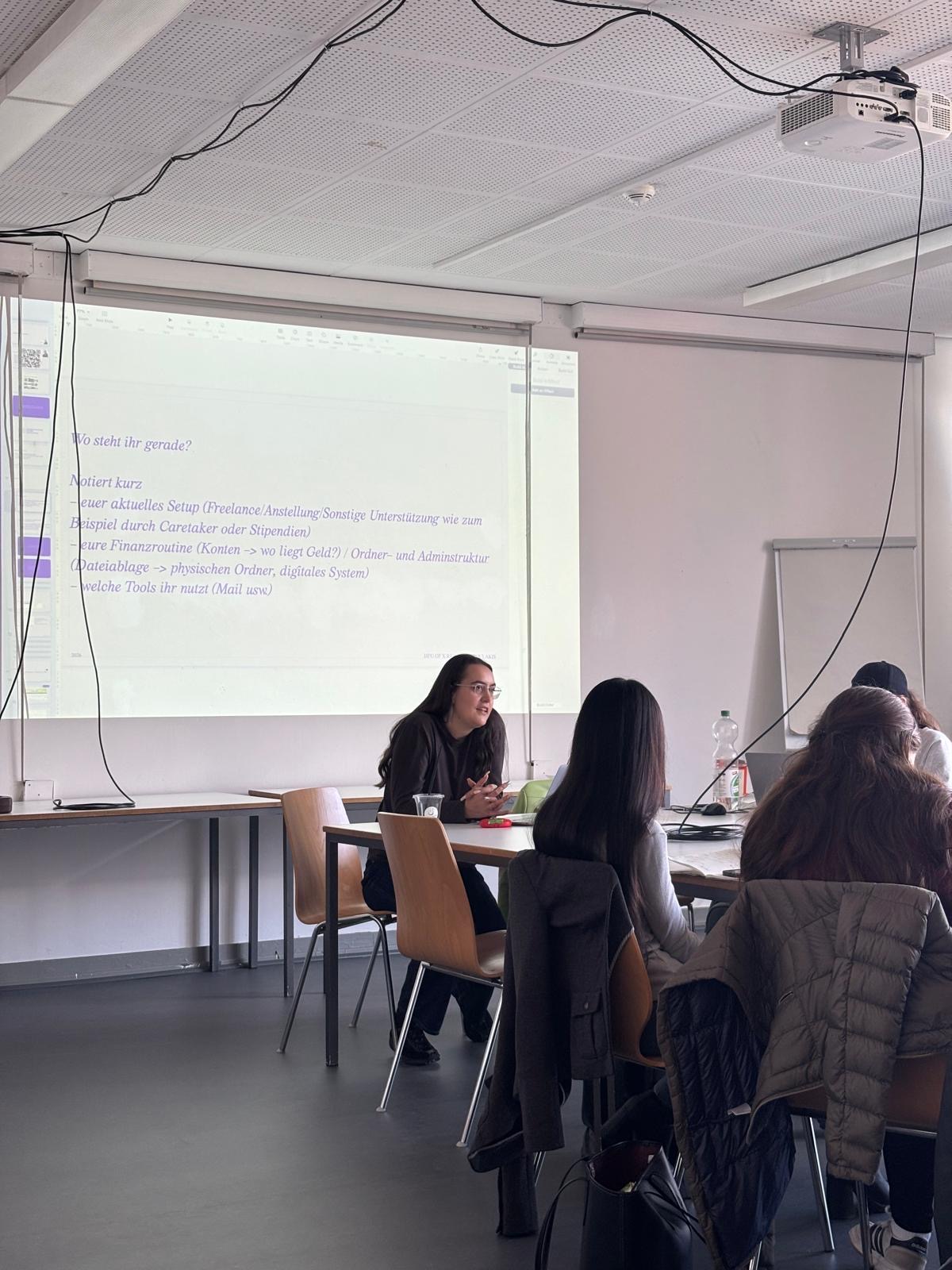
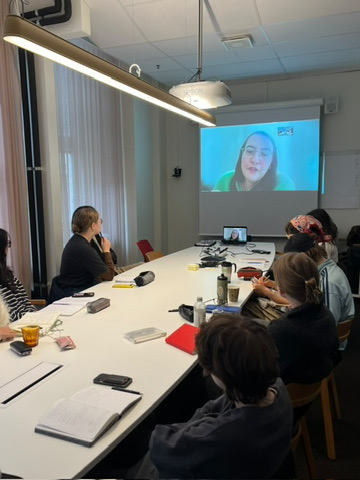
I guest lecture at art + design universities and have been invited to speak on podcasts about money or on pricing at startup accelerator programs.

I deliver lectures and educational workshops on a variety of topics

  • financial literacy and cash flow control
  • business model transformation
  • strategic pricing as leverage
  • money + emotions

All formats are interactive and customized to the specific audience.

principles

The environment businesses operate in is always changing.

Principles rarely do, so here are the ones that guide my advisory work + make up my own “mythodology”:

#1 pricing is more than just a number.

It’s a statement about how you see your work, your team, and the ecosystem you operate in. Every estimate you send is either reinforcing your positioning or eroding it.

#2 rejection is necessary feedback.

If everyone says yes, you’re undercharging. A “no” from the wrong client is as valuable as a “yes” from the right one ~ it means your positioning is working. Please stop trying to appeal to everyone.

#3 testing and experimenting are the only ways to future-proof.

A perfect pricing model that is set up once and kept forever does not exist anymore: Market dynamics shift, your team evolves, and your capacity changes ~ most likely all at the same time. The founders who win are the ones who treat pricing as a living system, not a fixed formula.

#4 revenue leaks from your business model because you don’t communicate your value properly.

Creating good creative work or output is not enough. You need to be able to extract and narrate the most relevant value levers so your clients can actually see and feel the benefit and impact of your work.

#5 comparison clouds your focus.

The moment you start benchmarking your pricing, your positioning, or your offers against someone else’s business model or creative output, you lose clear sight. Your commercial architecture should be built for your studio, your capacity, your strengths, your story, your vision ~ never someone else’s.

#6 internal alignment and brand-building must come first.

Pricing confidence is built from the inside out. Whether that’s through your lens on culture, or a shared vision your team co-creates. When you do not know your “North Star”, you have no image to be perceived by.

#7 business is always individual to the context and structure in which it exists.

Generic business advice or standard templates don’t work for studios doing €250k (solo) – €3M+ (team, under 15 people). Every commercial situation is different: team size, market position, target clients, portfolio selection, creative discipline, and cash flow reality. A bespoke strategy is the only one that holds in the long-run.